This page describes the ESP8266 Sensor that was built for use in a LoRa network. The state of this sensor is: Work in progress
Still to be sorted out:
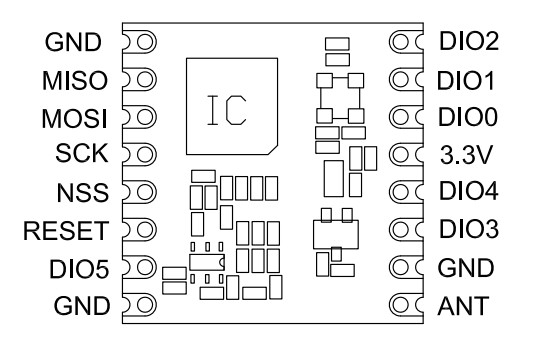
The following is the pin-out of the RFP95 chip. Of course if you choose to use a LoRabee or other type of adapter board you have to use thos pin settings.
Pin-out on HopeRF rfm95 shield:
| Top of LoRaBee (antenna) |
||
|---|---|---|
| DIO4 | GND | |
| DIO3 | GND | |
| DIO2 | GND | |
| DIO1 | 3.3V | |
| DIO0 | GND | |
MISO |
GND | |
MOSI |
RST | |
| SCK | 3.3V | |
| NSS | 3.3V | |
| RST | 3.3V |
Following picture from the Wemos.cc site shows the pin definitions for the Wemos D1-mini (Click it to enlarge)
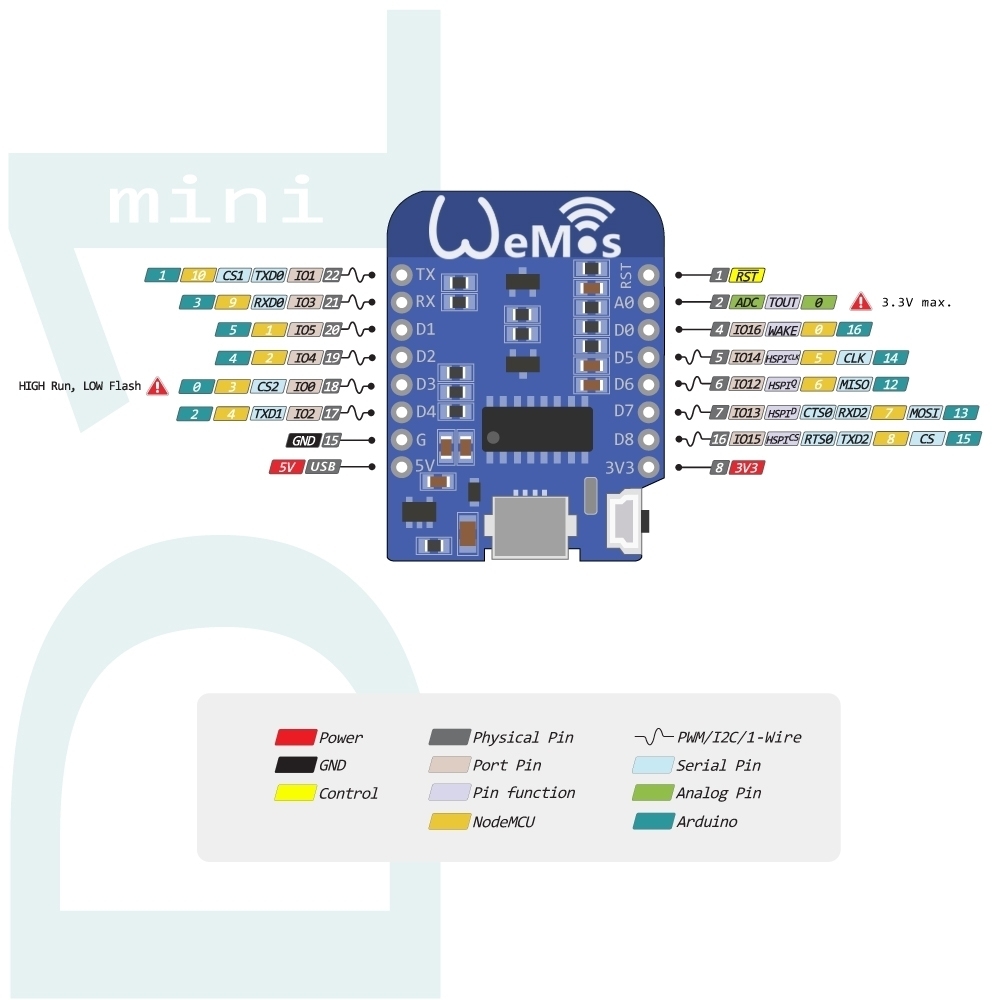
These connections must be made as a minimum to get the ESP8266 work with the RFM95 and the LMIC software. The software will probably also work on other ESP866 nodeMCU based boards, but pay attention as their pin layout might be different.
| Wemos top | LMIC | ESP8266 pins | NOTEs |
|---|---|---|---|
| DIO5 | |||
| DIO4 | |||
| DIO3 | |||
| DIO2 | .dio[2] | D3, GPIO3 | Probably leave open! |
| DIO1 | .dio[1] | D2, GPIO4 | Must be connected |
| DIO0 | .dio[0] | D1, GPIO5 | Must be connected |
MISO |
D6, GPIO12 | ||
MOSI |
D7, GPIO13 | ||
| SCK | D5, GPIO14, CLK | ||
| NSS | .nss | D8, GPIO15 | |
| RESET | .rst | D0, GPIO16 | No interrupt support (which is OK) |
| D3, GPIO0 | D3 is used to select boot-up. Only works with UART connected and flashing. Probably leave open! |
||
| D4, GPIO2 | Free -- To be used for OneWire sensors |
On the next page the connections are made to a DS18B temperature sensor.